Saturday, 24 August 2013

Vintage Diet Update....

Okay so since writing the vintage diet post I have found out that I am Dairy Intolerant so I didn't get very far as I was discovering a whole host of foods that I now can't eat and making a list of the ones that I can and substituting different things in my diet. I didn't realise quite so many things had milk in them. Since cutting out dairy from my diet, I have lost quite a bit of weight.
     But now that I have got that sorted out, I thought I would jump back on the Vintage Diet Wagon with you all and start trying some recipes from Wartime Britain.
     My go to website for vintage recipes is:

www.1940sexperiment.wordpress.com/

There are soooo many recipes on here for you to tuck into.

In the meantime I have a picnic/barbeque tomorrow and I need to think of some vintage recipes I can rustle up to take along with me. Do you have any ideas?

How does this sound for a wartime picnic menu:

Sausages and home made Burgers for the bbq
A Potato Salad with Vinaigrette Sauce
Carrot Cookies (I'm sure they taste better than they sound)
and finally some home made Lemonade

I think it will turn out quite a tasty dinner.

I found these wonderful photos of picnics in the 1930s and 40s


So romantic...
If only we all dressed that way to go on a picnic nowadays. That's got me thinking what should I wear? Hmmmmm I will get raiding my wardrobe and see what I can rustle up. Maybe I will post the results tomorrow......

Monday, 19 August 2013

The Classic Pencil Skirt


I recently made a 1940s inspired pencil skirt and it got me thinking about how pencil skirts have changed over time. Lets have a look at the vintage pencil skirt and the pencil skirts of today.

So here is the one I made....
The two things I like most is 1) the fit is not figure hugging but simply skims the hips and therefore it is not only flattering but also comfortable and 2) the length is to mid calf. It is modest and again flattering. It also feels very feminine to wear. I took my inspiration from the 1940's. It is a classic pencil skirt that can be worn with anything and to anywhere.
The 1940's Pencil Skirt
  • Christian Dior invented the first pencil skirt in 1940. It was a shortened adaption of the 1910 hobble skirt.
  • After the shapeless style clothes of the 20's women wanted to embrace the curves of the pencil skirt.
  • Earlier versions of the pencil skirt were initially part of a women's suit.
  • The pencil skirt made the corset popular again. Women wanted to accentuate their curves.
For me though I love the elegance of the 1940s pencil skirt. It skims the hips, is a modest but flattering length, makes you look slim and moves gracefully with the figure instead of restricting it.
 
So what about pencil skirts today...
 
The Modern Pencil Skirt
I love Fashion and how creative it can be. Pencil skirts have changed so much. To think that they started with a bit of rope tied round the skirt of the first woman to fly in a plane and now they are made in all shapes, materials, designs, lengths and for those who have that killer figure it looks great.
 
In my experience, however, I find that pencil skirts today don't fit properly. I have brought a few pencil skirts from shops and I have to squeeze in them, they don't compliment my figure and they are difficult to walk in. On the other hand the ones I have from vintage shops fit perfectly.
 
Have any of you had this experience? Share your thoughts about pencil skirts. Do you prefer vintage or modern?
 
This....


or this....


Monday, 5 August 2013

Taking Care of Your Garments

Hey Guys and Gals,

In one of my earlier posts I promised to do a post about taking care of our garments. So today I think I might just do that. I am always dropping things down me and staining my clothes, so if I were to replace a garment every time I got a stain, my purse would be empty. Here are a few frugal tips and a few vintage ideas that still hold up today...

Daily Care
Caring a little for your clothes every day will save you caring for them when it is too late and when the task has piled up.
Watch this video about how to be well dressed...

http://www.youtube.com/watch?v=FKOiIK6eEOU

Simple things like ironing, mending things like buttons and small tears and putting clothes away properly so that they hang properly on a hanger. By taking care of the small jobs you prevent them from becoming big jobs later on and you prevent possibly ruining the garment altogether.

Frugal tips
My Grandmother, my Mother and now I also swear by 'Astonish Carpet Cleaner'. Not only is it great for the carpet but it does wonders for stains in your clothes. All you do is squirt a little onto the stain, then gently rub it in. Work the cleanser into the fabric until the stain is gone then rinse under cold water.

When attempting to get stains out, never use hot water. All you are doing is baking the stain.

For those really delicate garments that are not colour fast, get a large bowl of luke-warm to cool water and pour in lots and lots of salt. I mean a lot! Dip the garment in and let it drip dry. The salt will lock the colour in so that it does not run. It is also probably best to do this on a day when the weather is nice.

Try using vinegar. I am yet to try this but apparently it makes you whites whiter, your colours brighter, eliminates static cling, prevents dye from running, softens your laundry and actually eliminates odours. I will give this a go and let you know how it works out.

Here are a few extra tips for you to try out...

So there are a few tips and tricks to keeping your clothes clean the vintage way.
I hope you have a go at some of these.

Speak soon

Saturday, 6 July 2013

The Vintage Diet

Hey Ladies and Gents,

Sorry it has been such a long time since I last posted. Moving house is a very hectic process and we are right in the middle of it. As the hot weather is finally here in Britain and we are getting our summer wardrobe out, some of us may still be feeling a bit self conscious of our figures. So I thought what better time is there to talk about The Vintage Diet. How does our diet compare to back then? and How have our figures changed?

1940's

During the 1940's WWII was underway and rationing had taken hold. Rationing has always fascinated me, as I think of how much we have now and how much gets thrown away. We say things like "I couldn't live without McDonalds or chocolate!" During the second world war, however, they had none of that. They had so little but still managed to get by. Could you live off rations?

Average rations per person per week were:
4oz/100g bacon and ham
Meat to the value of 1/2 shilling (about 1/2lb of minced beef)
2oz/50g butter
2oz/50g cheese
4oz/100g margarine
4oz/100g cooking fat
2-3 pints of milk
8oz/200g sugar
Preserves 1 lb every 2 months
2oz/50g tea
1 fresh egg
12oz/300g sweets every 4 weeks
1 packet of egg powder per month

For vegetables and fruit people were encouraged to 'Dig For Victory'. Gardens were  turned into allotments, as people grew their own food.

In addition to the rationing and 'Dig For Victory' there was a points system. You were allowed 16 points but that had to last 4 weeks. This was to control how much people bought of imported and canned goods.

1950's
Though the war had ended in 1945 rationing continued. In fact it actually became stricter once the war had ended. Bread was rationed from 1946. Potato rationing started in 1947.
During the early 50's, though, thing started to look up. Sweet rationing ended in 1953 and sugar rationing ended in the September of the same year. By July 4th 1954 all rationing had ended, 9 years after the war.

Not only were the diets different but also the lifestyle of women in the 40s and 50s was different.
Checkout this article on the mail online:

http://www.dailymail.co.uk/health/article-191200/How-1950s-women-stayed-slim.html

Today

Can you see the difference!

Not only have the majority stopped cooking nutritious, home cooked meals but most families don't eat together any more.
On average women in the 1950's consumed around 1200 calories. They burnt around 1000.
Today women eat on average about 2000 calories and because of washing machines and cars and supermarkets they only burn about 600.
Food for thought I think.

Body Image Then and Now

Years ago in vintage times skinny was not seen as attractive. While many men say they prefer curves, the glossy magazines of today certainly do not promote adverts like the one above. Skinny is in according to society. What do you think?

A typical woman's measurement's in the 1950s were 36-24-35. Today they are more like 38-34-40 and also around half a stone heavier.

So if you have been inspired to try The Vintage Diet with me then great, I would love to hear from you. I will post a few vintage recipes over the next few weeks so keep your eyes peeled.

Wednesday, 29 May 2013

Re-createThe Great Gatsby

With the release of the much anticipated film 'The Great Gatsby', which I am yet to see, so many people are falling in love with the 1920s fashion. The glitz and glamour of the 1920's is eye-catching and unique. Here's how you can achieve it.

Hair
Short hair and finger waves were popular...

Here is a video from cherry doll face on how to achieve the Great Gatsby hair look without having to chop off your locks...
http://www.youtube.com/watch?v=EKxFUAK7ilc
Check out her other videos too she is really good.

Make-up


Before the roaring 20's nice girls just didn't wear makeup. It was often associated with promiscuous women and those on stage. Lets take rouge (now called blush). It was messy to use until the compact was invented. It was made easy to apply and transport and socially acceptable. it soon became fashionable to wear but not like we do today. Instead of dabbing it along the cheekbones they would apply in in circles on the cheeks.

Lipstick in a tube was invented in 1915 and was made easy to apply to that a lady could touch up often. Stencils were introduced to create a perfect line. On the top lip the lipstick went over the lip line and shaped like a cupids bow. On the lower lip, it was applied in an exaggerated manner. On the sides, the colour stopped short of the natural lip line. On the lower lip is was applied in an exaggerated manner and on the sides it stopped just short of the natural lip line. The most popular choice was red but you often see photos of women wearing very dark lipstick.

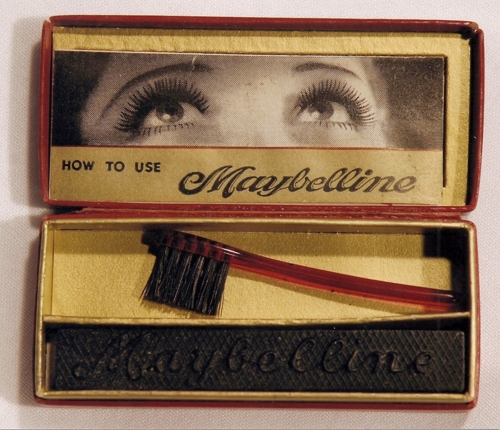
Ok so mascara looks a little different now.
Eyes were kept dark, lined with smudged liner and then mascara. Eyelash curlers were invented in 1923 and used for a more dramatic effect.
Here is a 1920s makeup tutorial
http://www.youtube.com/watch?v=YEdUmByxx7w

Fashion
This is the era where women started to wear more comfortable clothing and first started to abandon the restricted clothing of the past. From 1925 the public passionately embraced the style closely associated with the roaring 20's. These style continued to characterise fashion until 1932.
    
The cloche hat, the dropped waist and the straight line chemise characterises the flapper style. Skirts were shorter and pleats, gathers or slits were added to skirts to allow more motion...

Here is a link to a few shops on etsy selling 1920s originals...
https://www.etsy.com/uk/search/vintage?q=1920s&view_type=gallery&ship_to=GB

Saturday, 11 May 2013

Make do and Mend.....Beauty

If you can get away with going natural then do. Natural hair is so beautiful. You could try lemon juice but be warned this could leave your hair dry and brittle if you use it often. Honey is a better option:

Continuing the Make do and Mend theme this week, today we will look at how we can be beautiful on a budget. During World War 2 clothes were rationed. As clothes were lacking that somewhat sparkle, women resorted to emphasising their hair and makeup to make themselves look more beautiful. Lets see what they did....

                                                Hair
      Conditioner:
Try a tablespoon of olive oil. I know it sounds gross but I have tried this one myself.
-Thoroughly wet your hair,
-Rub 1-2 tablespoons of the oil through your hair massaging into the scalp,
-Wrap your hair in a towel for 20-30 minutes and wash out with a shampoo. (You may need to wash it a couple of times
It gives hair a glossy, healthy shine and gets rid of any unsightly dandruff. Plus the shine will last longer than just 1 wash.
       Lightening natural hair:
      -3/4 cup of honey and 1/2 cup of water,
      -apply to the hair
      - wrap in a plastic wrap, (clingfilm or a shower cap will do)
      - Leave for around 8 hours (so probably overnight is best)
-wash out.
       To darken hair
-I have heared that soaking hair in black tea for 15mins,
-wash out.
- Repeat over the next couple of weeks and you will start to see a difference.


I would not advise these natural ways to lighten and darken hair if your hair is already coloured.
(a vintage styling post will be at a later date)

Skin
     Everyone's skin is different. I personally have very sensitive skin so face wash is the one thing I splash out on once a year and use the salon Dermalogica. But there are some thrifty ways to getting glowing skin if you wish to try them. such combinations as face cream mixed with sugar and also green tea mixed with honey and sugar. Here is a site that gives 4 different combinations for homemade natural facial scubs....

http://www.wikihow.com/Make-a-Basic-Homemade-Facial-Scrub

     Occasionally we all get that dreaded zit. Don't dash to the chemist for those expensive spot creams. A great and of course cheaper alternative is Witch Hazel. Witch Hazel is good for the skin in general as it is a natural astringent. It cleanses and refreshes the skin, gently tones, it does not remove the essential oils in the skin leaving it dry, and temporarily relieves the skin of minor irritations such as cuts, scrapes, insect bites and of

 course zits. Again be careful when using different things on your skin, if you have very sensitive skin like I do.

Makeup
      As makeup ran thin during the war, women resorted to using such things as beetroot as a lipstick, charcoal as eyeliner and charcoal when mixed with a little petroleum jelly used as a mascara. I'm not saying it is a good idea to use these things now especially charcoal on the eye. However, consider what makeup you use. Can you use less so as to make it last? Can you buy cheaper brands?
      To cut down on makeup of course, it is essential that you treat your skin well. Wash your face properly and moisturise regularly.
I have found it beneficial to have 1 day a week when I don't where any makeup. It gives your skin a bit of time to breath.
For some vintage make up tips check out these:
http://glamourdaze.com/category/1940s-makeup

So have a go at trying some natural ways to make your self look beautiful with the make do and mend attitude. Let me know what you think.

Friday, 10 May 2013

Make Do And Mend

It is such a well know phrase and the 'make do and mend' way of life is becoming ever more popular. As the cost of living goes up we are all starting to feel the pinch. But there are ways to live the high life on a budget. So, throughout the week we will look at different areas of life that we can make do and mend without feeling hard done by...


Today, then, lets look at how you can make do and mend your way to that fabulous wardrobe. My favourite style is definitely that of the 1940's and 1950's but these simple rules will work for any era even a modern style.

Recycle and Reuse

Don't just throw away your old clothes, recycle and reuse them. Making small alterations to the fit can save you a fortune. If the trousers are too short for you alter them into cropped trousers or shorts. If they are too long alter the hem to the right length. The difference between a £2 spool of thread and a £30 pair of trousers will keep you happy and help you develop important skills.


What if something has torn or there is a stubborn stain? Ask yourself "can I use the material for something else?" "Is there a nice trim or buttons on this item that I could use on something else?" or "can I add some trim, beads or buttons in a decorative way to hide the stain?" Also don't forget to take proper care of your garments to ensure that they stay looking their finest. (Frugal ways to care for garments will be a post at a later date.)

Have a look at this great website:
http://www.make-do-and-mend.org/
I stumbled across this the other day and have learnt some new tips ans tricks myself.

Charity Shops
Don't be shy of rummaging through charity stores. Some of my favourite clothes are from charity stores. You can pick up some great quality items from really low prices and you are giving to a good cause. Don't just look for clothes that you would wear though, look out for things that have for example a lace trim or some pretty buttons that would go with an item you already own. Be sure to check it is the right price or you could find yourself spending more than you want.

So have a go at making do and mending your wardrobe. You will be surprised at what you find and create.

Thursday, 9 May 2013

A Very Vintage Life For You

Vintage is all the rage. The fashions, the music, the whole way of life. This Blog is about everything vintage. There will be recipes, fashion, history, music, events, things for around the home. Basically anything that relates to vintage. Let me know your vintage stories and the things you like and I will try to include posts about those things.
 
So welcome to a vintage life.